


-
Upload photo
Re-upload
Accepting: jpg, png. Max file size: 10 MB
What are the two types of tire pressure monitoring system?
by Melanie Victoriano (Content Editor)
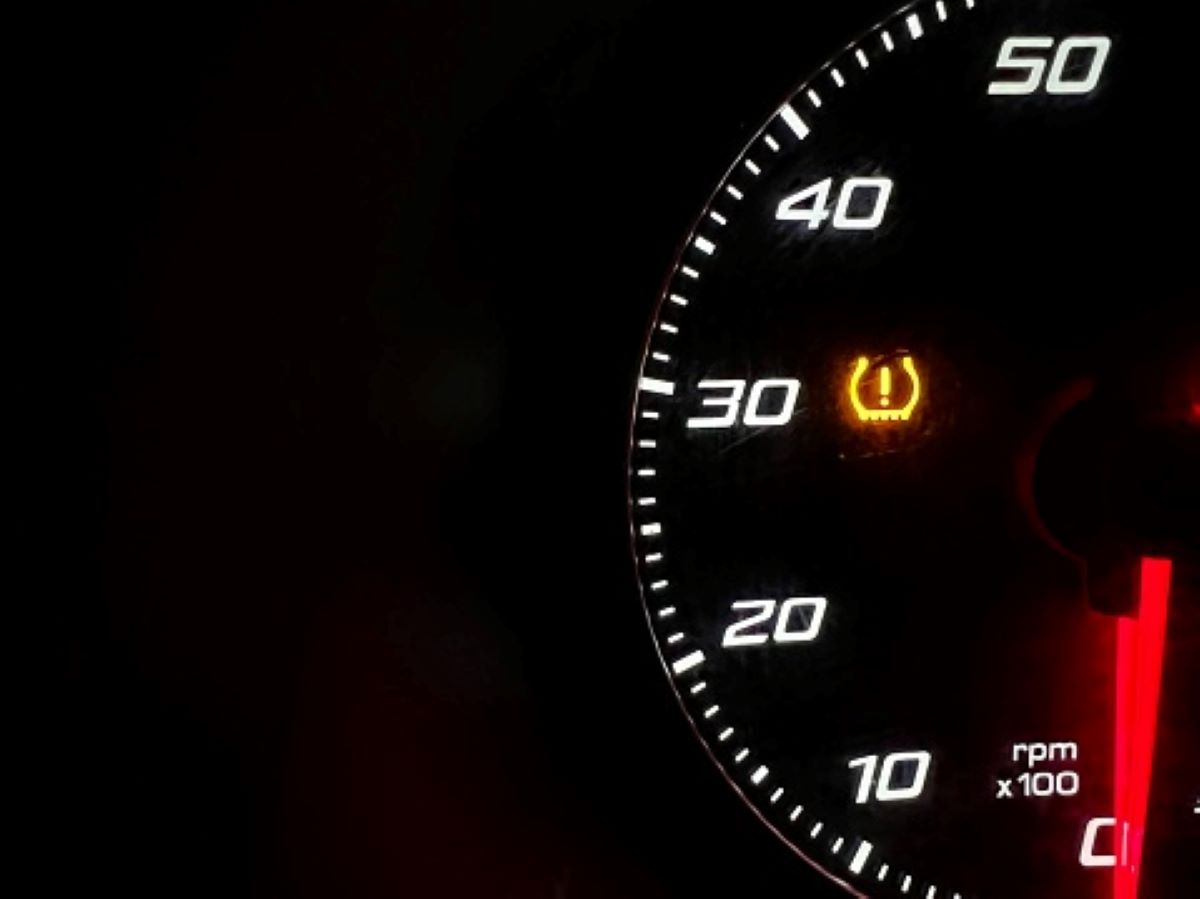
Image source: Getty
A tire-pressure monitoring system (TPMS) is a device comprising a sensor for each tire and a control module, which monitors air pressure inside vehicle tires. The system activates a warning light to alert the driver that a tire is below or above its expected air pressure level, which is expressed in pounds per square inch (psi), Bar, or kilopascals (kPa). Some TPMS systems also monitor tire interior temperature.
A horseshoe-shaped light – actually a cross-sectional view of a tire – with an exclamation point inside is the standard TPMS warning light. A driver seeing this on a TPMS display screen must heed the warning and check the tires, filling them with air as needed and at the right pressure level, to avoid a blowout or other hazard related to tire wear that could result in an accident.
In some car makes, the warning to the driver is a literal, instead of visual, warning. For example, “Service Tire Monitor System” is the phrase programmed to display on the TPMS screen of the Chevrolet Silverado if the system detects problems, such as if a tire is under- or over-inflated or is out of the safe range of interior temperature.
In some cars, the TPMS gets activated only when a certain speed is reached. Volvo cars equipped with the proprietary “Tyre Pressure Monitoring System” need to be driven at 30kph or faster for the TPMS to be able to detect tire pressure.
Tire pressure monitoring systems are of two types – direct and indirect.
Direct TPMS
Direct TPMS, or dTPMS, uses sensors inside each tire that read internal air pressure and sometimes temperature. In manufacturer-installed dTPMS, the sensors are usually mounted inside the tires, while in aftermarket models, the sensors are mounted outside the tires, usually to the stem valves.
In dTPMS, the information from the tire sensors is transmitted as radio signals to a control module which analyzes the data and sends commands to activate the warning light on the TPMS display screen or dashboard in case tire issues are found.
The control module of a dTPMS unit is programmed with a range of acceptable tire air pressure levels which is often between 28 and 35 psi. But most dTPMS devices can be configured based on the recommended air pressure level indicated on the tire itself or on the door panel of the vehicle.
Indirect TPMS
Indirect TPMS, or iTPMS, does not use pressure sensors but the wheel speed sensors of a car’s anti-lock brake system. These sensors measure the rate of revolution of each wheel.
The car’s on-board computer system compares each tire’s rate of revolution with the speed of the vehicle to derive the tire’s state of inflation.
Usually, the computer interprets a wheel that is spinning faster than expected as a sign of an under-inflated tire and will issue a command for the TPMS to light up the warning symbol.
Built-in and aftermarket versions
Some car models have TPMS built-in by manufacturers, but others are fitted with aftermarket TPMS by their owners.
Aftermarket TPMS are not any less than built-in systems. According to Forbes, “Today’s aftermarket sensors are more capable than the first generation of sensors that came with factory-equipment systems.” While factory systems have warning lights that activate when a tire pressure issue is detected, Forbes adds that most aftermarket systems will show the actual air pressure of each tire.
TPMS maintenance
Once installed, car owners and drivers must periodically check the TPMS. The sensors of TPMS are electrical components that deteriorate with age and whose performance can be affected by dirt, dust, heat and irregular power supply.
Drivers must be alert to signs that they have faulty tire pressure sensors. Signs of faulty sensors include: suddenly finding the car difficult to drive – the tires may have been running flat but were not detected; the car’s electronic control unit (ECU) or powertrain control module (PCM) activating dashboard lights –indicating that some sensors may be malfunctioning; and incorrect warnings – such as indicating a flat when a check reveals there is none.
Some drivers keep a tire gauge on hand to check whether the sensors' air pressure readings are accurate.
Development and growth forecast for TPMS
TPMS devices are important for car and passenger safety because improperly inflated tires can cause problems such as a flat tires, blowouts, hydroplaning, low fuel economy and low load-carrying ability.
TPMSes were an optional feature found only in luxury European cars like the Porsche 959 in the 1980s. But the passing of a US law – the TREAD Act of 2000 – after tire controversies involving Firestone and Ford, led to mass-market adoption of the devices. The TREAD Act led to TPMS being mandatory for vehicles in the US from 2007. Another country which requires TPMS in all cars is Korea, since 2015. China made TPMS installation obligatory for cars in production from 2020.
The first tire pressure monitoring system is attributed to August Schrader, a German immigrant to the US who was a mechanic by profession. In the 1890s, Schrader and his son George developed the pneumatic tire valve, which was first used on bicycles and later in cars. It’s the same valve which has a key role in TPMS. Schrader and son later founded the company that carries their name. The company pioneered the TPMS by equipping the Corvette C5 with such a device in 1997.
The global automobile TPMS market is forecast to grow at 5.2 percent CAGR in the next three years. According to research by Market Study Report.com, the sector will increase in value from $3.63 billion circa 2019 to reach $4.43 billion by 2025.
For more information on TPMS manufactured by Global Sources’ vetted suppliers, click here.
Source the latest products from verified suppliers via global sourcing platform, and subscribe to our magazines for more in-depth insights and product discovery.
Join the Smart China Sourcing Facebook Group
- Connect with other buyers
- Ask questions
- Get advice from experts
The Related News
![]()
![]()
![]()
![]()
Serger vs Sewing Machine: Key Difference
2023/09/08